



Round Hole Perforated Sheets
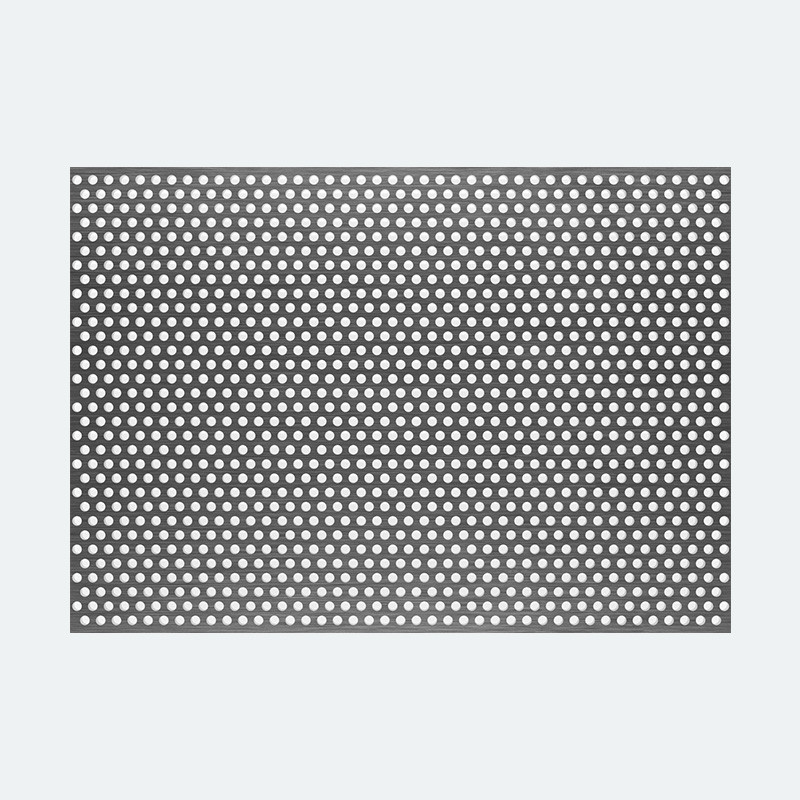
| 0771- R3T6 | |
| Hole Diameter (R): | Ø3mm |
| Centre-to-Centre Distance (T): | 6mm |
| Sheet Size: | 1000x2000mm |
| Thickness: | 1mm |
| Open Area: | 20% |
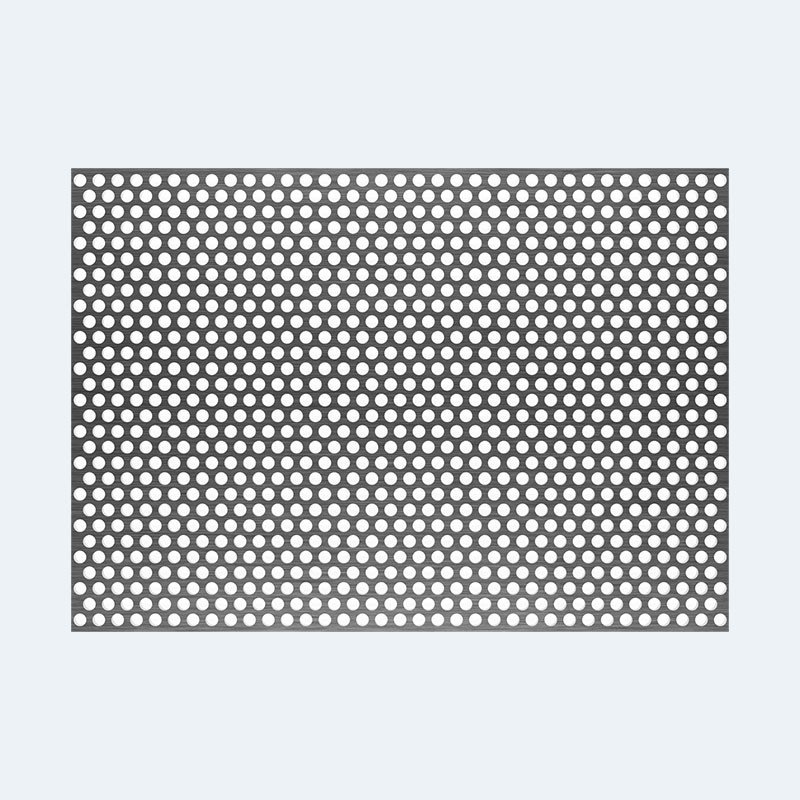
| 0771-A R4T6 | |
| Hole Diameter (R): | Ø4mm |
| Centre-to-Centre Distance (T): | 6mm |
| Sheet Size: | 1000x2000mm |
| Thickness: | 1mm |
| Open Area: | 36% |

| 0772- R4T8 | |
| Hole Diameter (R): | Ø4mm |
| Centre-to-Centre Distance (T): | 8mm |
| Sheet Size: | 1000x2000mm |
| Thickness: | 1mm |
| Open Area: | 19% |

| 0772-A R5T10 | |
| Hole Diameter (R): | Ø5mm |
| Centre-to-Centre Distance (T): | 10mm |
| Sheet Size: | 1000x2000mm |
| Thickness: | 1mm |
| Open Area: | 20% |

| 0773 R6T10 | |
| Hole Diameter (R): | Ø6mm |
| Centre-to-Centre Distance (T): | 10mm |
| Sheet Size: | 1000x2000mm |
| Thickness: | 1mm |
| Open Area: | 27% |

| 0773-A R7T12 | |
| Hole Diameter (R): | Ø7mm |
| Centre-to-Centre Distance (T): | 12mm |
| Sheet Size: | 1000x2000mm |
| Thickness: | 1mm |
| Open Area: | 28% |

| 0774 R8T12 | |
| Hole Diameter (R): | Ø8mm |
| Centre-to-Centre Distance (T): | 12mm |
| Sheet Size: | 1000x2000mm |
| Thickness: | 1mm |
| Open Area: | 36% |
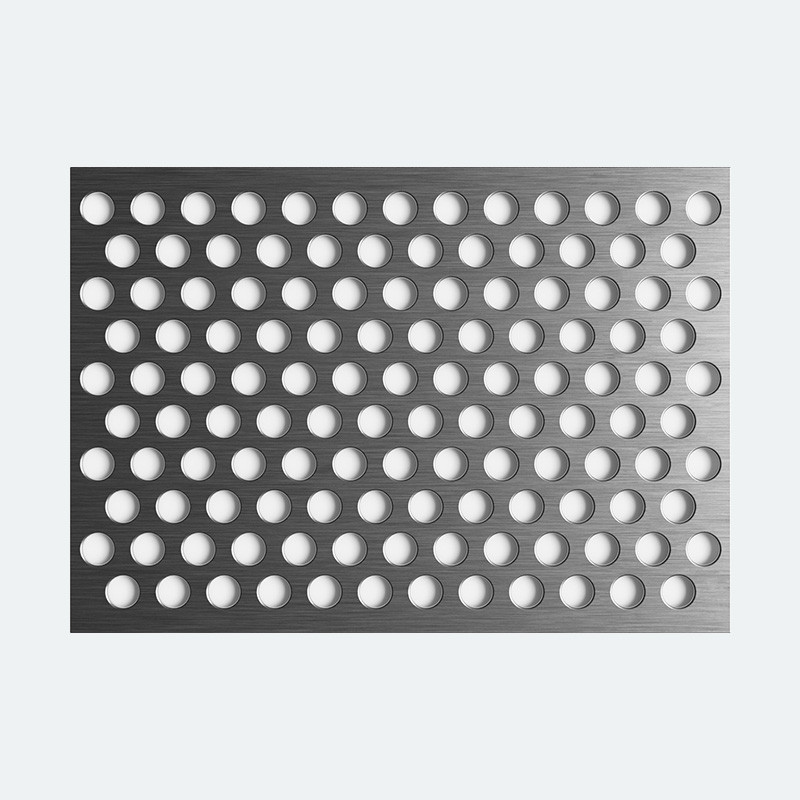
| 0775 R10T16 | |
| Hole Diameter (R): | Ø10mm |
| Centre-to-Centre Distance (T): | 16mm |
| Sheet Size: | 1000x2000mm |
| Thickness: | 1mm |
| Open Area: | 30% |
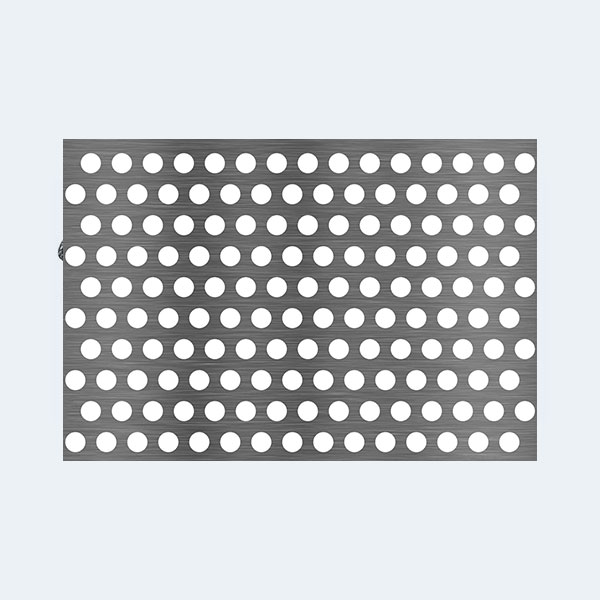
| 0776 R12T19 | |
| Hole Diameter (R): | Ø12mm |
| Centre-to-Centre Distance (T): | 19mm |
| Sheet Size: | 1000x2000mm |
| Thickness: | 1mm |
| Open Area: | 33% |
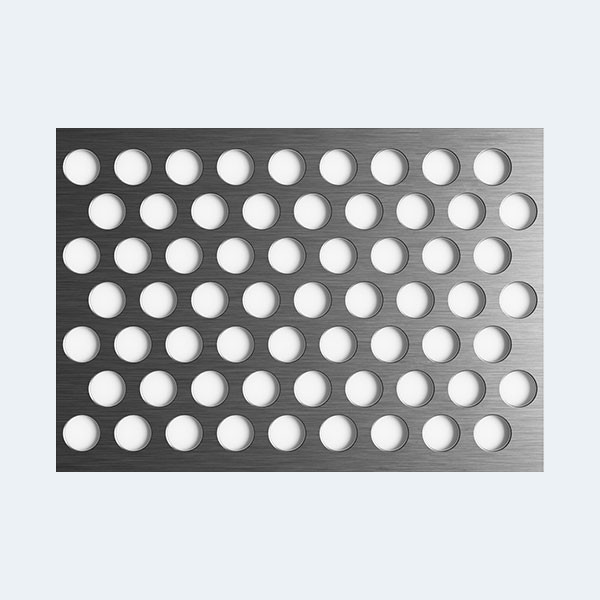
| 0777 R14T22 | |
| Hole Diameter (R): | Ø14mm |
| Centre-to-Centre Distance (T): | 22mm |
| Sheet Size: | 1000x2000mm |
| Thickness: | 1mm |
| Open Area: | 32% |
| 0778 R20T25 | |
| Hole Diameter (R): | Ø20mm |
| Centre-to-Centre Distance (T): | 25mm |
| Sheet Size: | 1000x2000mm |
| Thickness: | 1mm |
| Open Area: | 24% |
Application Areas of Round Hole Perforated Sheets
Round hole perforated sheets are functional and durable materials with a wide range of applications, from industrial production to architectural uses. Hole diameter is one of the most important parameters that directly affects the performance of these products. In filtration, ventilation, protection and decorative applications, selecting the correct hole diameter determines the efficiency of the system.
In this article, we examine the application areas of round hole perforated sheets from a technical perspective, according to hole diameter.
1. Small Diameter Holes (0.5 mm – 3 mm)
Small diameter holes are preferred in applications requiring high precision. These sheets are generally used for separating fine particles or providing controlled flow.
Main application areas:
- Filtration systems (dust, flour, chemical particles)
- Screening systems (food and agriculture sector)
- Flow control surfaces
- Acoustic panels (sound-absorbing surfaces)
Technical advantages:
- High filtration precision
- Balanced flow thanks to homogeneous distribution
- Fine particle retention capacity
For this group of sheets, hole spacing and open area ratio must be carefully calculated. Otherwise, the risk of clogging may increase.
2. Medium Diameter Holes (3 mm – 10 mm)
Medium diameter holes offer a balanced structure in terms of both strength and permeability. This is the most widely used hole group in industrial applications.
Main application areas:
- Machine guard panels
- Ventilation and air conditioning systems
- Agricultural machinery (screening and separation)
Shelving and support systems
Technical advantages:
- Adequate air and light permeability
- Balance between mechanical strength and open area ratio
- Versatile usage options
This diameter range offers ideal solutions for applications requiring both safety and performance.
3. Large Diameter Holes (10 mm – 50 mm and above)
Large diameter perforated sheets are mostly preferred in protection, cladding and architectural applications. As the open area ratio is high, visual permeability and air flow are at maximum level.
Main application areas:
- Façade cladding systems
- Brise soleil panels
- Security barriers
- Industrial platforms and walkways
Technical advantages:
- High air and light permeability
- Lightness (thanks to reduced material)
- Aesthetic and modern appearance
In such applications, sheet thickness is critical in terms of load-bearing capacity. As hole diameter increases, thickness must be increased to preserve mechanical strength.
4. Points to Consider When Selecting Hole Diameter
When choosing round hole perforated sheet, not only the hole diameter but also the following technical criteria should be taken into account:
- Open area ratio (%)
- Hole layout type (straight / staggered)
- Sheet thickness
- Material type (DKP, galvanised, stainless)
- Load and environmental conditions in the application area
The right combination directly affects both the performance and service life of the product.
Conclusion
Round hole perforated sheets are versatile products that meet different technical requirements depending on hole diameter. Small-diameter holes provide precise filtration, while medium-diameter holes are ideal for general industrial use. Large-diameter holes stand out in architectural applications and those requiring high permeability.
Correctly determining the hole diameter and technical specifications suited to your project ensures the best outcome in terms of both efficiency and cost.


