Blog
Materials Used in Brise Soleil Systems


Materials Used in Brise Soleil Systems
Which materials are used in brise soleil systems?
Aluminium, galvanised steel, stainless steel, expanded metal, perforated sheet and architectural mesh solutions are selected according to the technical requirements of the project, its architectural design and the climate conditions of its location.
Choosing the right material directly affects the durability, shading performance, maintenance needs and service life of the brise soleil system.
As Kirimci Metal, with our manufacturing capacity, we produce project-specific brise soleil systems suitable for different building types and architectural requirements.
What Is a Brise Soleil System?
Brise soleil systems are architectural elements applied to building façades or in front of windows, allowing sunlight to reach interior spaces in a controlled manner.
The main purpose of these systems is to reduce direct sunlight, balance interior temperature and help reduce cooling needs. At the same time, they give the building façade a modern, aesthetic and distinctive appearance.
Brise soleil systems are particularly preferred for the following types of buildings:
- Offices and business centres
- Hotels
- Shopping centres
- Hospitals
- Educational buildings
- Industrial facilities
- Residential projects
- Public buildings
As a brise soleil system manufacturer, Kirimci Metal offers project-specific size, shape, material, colour and surface coating options.
Main Materials Used in Brise Soleil Systems
The performance of brise soleil systems depends on the technical properties of the material used. Factors such as durability, weight, corrosion resistance, maintenance needs, appearance and cost should be evaluated together when selecting a material.
1. Aluminium Brise Soleil Systems
Aluminium is one of the most commonly used materials in brise soleil systems. Thanks to its lightweight structure, it places less load on the supporting structure and makes installation easier.
Aluminium profiles can be produced in different sizes and shapes. Different colour and surface options can be achieved through anodising or electrostatic powder coating applications.
Advantages of aluminium
- Has a lightweight and durable structure.
- Resistant to corrosion.
- Easy to shape.
- Practical to install.
- Offers a modern and sleek appearance.
- Can be produced in different colours.
- Provides long-lasting use.
- Requires low maintenance.
Aluminium brise soleil systems are widely used on the façades of offices, hotels, hospitals, residential and commercial buildings.
2. Galvanised Steel Brise Soleil Systems
Galvanised steel is obtained by coating the steel surface with zinc. This coating makes the material more resistant to outdoor conditions and corrosion.
Galvanised steel can be preferred for large-scale brise soleil systems that require high strength.
Advantages of galvanised steel
- Has a high load-bearing capacity.
- Resistant to impacts and mechanical effects.
- Resistant to outdoor conditions.
- Can be used for large spans.
- Offers economical solutions.
- Provides long-term use.
Galvanised steel brise soleil systems are particularly preferred for industrial facilities, factory façades, car parks and large-scale commercial buildings.
3. Stainless Steel Brise Soleil Systems
Stainless steel is used in projects with demanding environmental conditions due to its high corrosion resistance and strong mechanical properties.
With brushed, polished or matt surface options, it helps create prestigious and contemporary façade designs.
Advantages of stainless steel
- Offers high corrosion resistance.
- Resistant to humid and chemical environments.
- Has a strong and robust structure.
- Provides a premium appearance.
- Easy to clean and maintain.
- Has a long service life.
Stainless steel brise soleil systems can be used in buildings in coastal areas, airports, hotels, commercial centres and prestigious architectural projects.
4. Expanded Metal Brise Soleil Systems
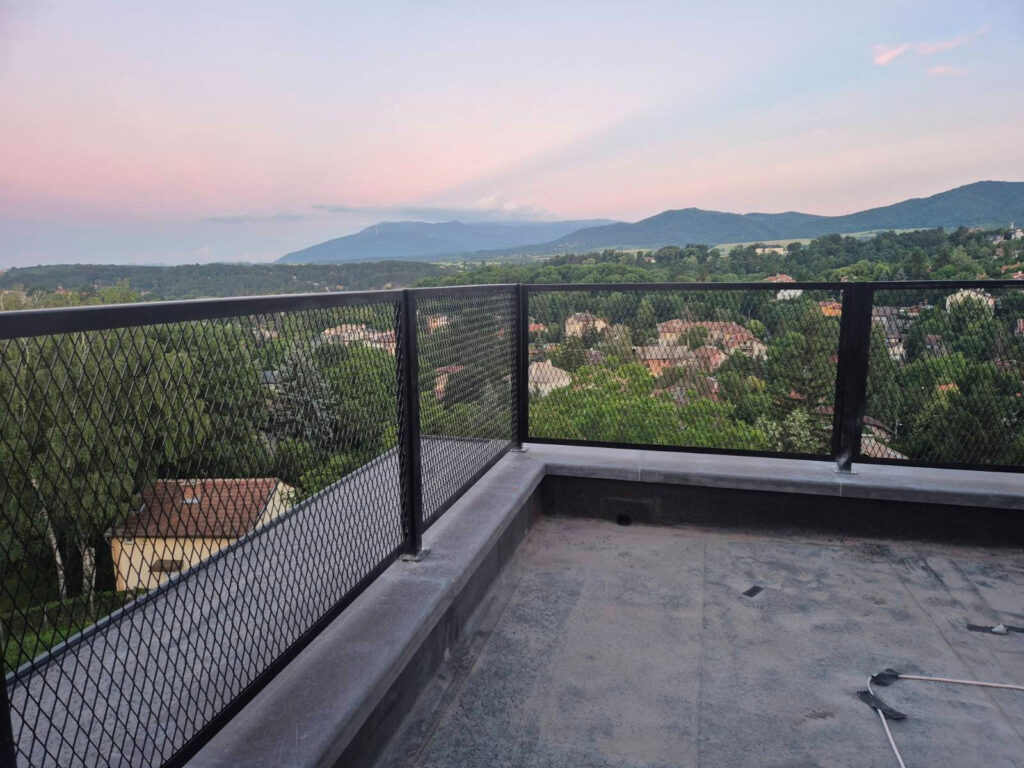
Expanded metal is a mesh-like material produced by cutting and stretching a metal sheet at regular intervals.
Expanded metal brise soleil systems allow natural air circulation to continue in addition to sun control. Thanks to different mesh openings and pattern options, they give the façade design a dynamic appearance.
Advantages of expanded metal
- Provides effective shading.
- Maintains natural air permeability.
- Has a lightweight and durable structure.
- Contributes to decorative façade design.
- Can be produced with different mesh openings.
- Creates light and shadow effects.
- Contributes to security and privacy.
Expanded metal brise soleil systems are used on car park façades, social facilities, sports centres, educational buildings, commercial buildings and industrial projects.
5. Perforated Sheet Brise Soleil Systems
Perforated sheet is produced by punching holes of different diameters and shapes into metal sheets. Sunlight can be controlled by varying the frequency, size and placement of the holes.
In addition to standard round and square holes, project-specific patterns can also be applied.
Advantages of Perforated Sheet
- Allows controlled passage of sunlight.
- Can be manufactured with project-specific patterns.
- Creates decorative and distinctive façades.
- Supports natural ventilation.
- Offers different levels of permeability.
- Allows the application of corporate patterns or logos.
- Available in various colours and surface options.
Perforated sun shading systems are preferred for corporate buildings, cultural centres, shopping malls, car parks and modern residential projects.
6. Architectural Mesh Sun Shading Systems
Architectural mesh systems are formed by weaving metal wires or joining them through special connection methods. They offer a balanced solution between transparency, shading and aesthetic appearance on façades.
Depending on the angle of sunlight and the selected mesh texture, the amount of light reaching the interior can be controlled.
Advantages of architectural mesh systems
- Provides a modern and prestigious appearance.
- Filters sunlight.
- Allows air circulation.
- Offers a lightweight and flexible structure.
- Creates a balance between transparency and privacy.
- Can be applied to large façade surfaces.
- Creates striking façades with night lighting.
Architectural mesh sun shading systems are suitable for hotels, shopping malls, cultural buildings, offices and prestigious commercial projects.
How to Choose the Right Material for a Sun Shading System?
The material to be used is not the same for every sun shading system project. When making the correct choice, not only the appearance but also the technical and environmental conditions of the project should be taken into account.
The main criteria to consider when selecting a material are as follows:
Climate and environmental conditions
Environmental conditions such as heavy rainfall, humidity, coastal exposure, high temperatures and strong winds directly affect material selection. In areas with a high risk of corrosion, durable options such as aluminium or stainless steel may be preferred.
Architectural design of the building
The sun shading system should visually integrate with the building façade. In modern structures, options such as aluminium, expanded metal, perforated sheet and architectural mesh can be used.
Direction of sunlight
The building’s façade orientation, the angle of incoming sunlight and the duration of sun exposure during the day determine the dimensions and layout of the system. The choice between horizontal or vertical sun shading should also be made according to the façade orientation.
Load-bearing system capacity
The weight of the material to be applied to the façade must be compatible with the capacity of the existing load-bearing system. In applications requiring lightness, aluminium and expanded metal can offer an advantage.
Maintenance requirements
The material’s cleaning, painting and surface renewal needs should be evaluated. For projects where low maintenance cost is desired, long-lasting coating options should be preferred.
Budget planning
In addition to the initial investment cost, the expenses that will arise during installation, maintenance and throughout the service life should also be taken into account. Rather than the lowest-cost option, the material that will provide advantages throughout the project’s lifetime should be selected.
Fixed and Movable Sun Shading Systems
In addition to material selection, whether the system is fixed or movable is also important.
Fixed sun shading systems are mounted on the façade at a predetermined angle and position. In movable sun shading systems, the angle of the panels or slats can be adjusted manually or automatically according to the position of the sun.
Aluminium and steel profiles can be used in both fixed and movable sun shading systems. Expanded metal, perforated sheet and architectural mesh applications, on the other hand, are mostly preferred as fixed façade elements.
Advantages Provided by Sun Shading Systems
Sun shading systems manufactured with the right material and application method provide many advantages to buildings:
- Limits direct sunlight.
- Reduces excessive heating of interior spaces.
- Helps reduce the load on cooling systems.
- Contributes to energy efficiency.
- Allows controlled use of daylight.
- Gives the façade a modern and aesthetic appearance.
- Can increase the level of privacy.
- Strengthens the architectural identity of the building.
Kirimci Metal’s Manufacturer Advantage in Sun Shading Systems
As Kirimci Metal, we provide services directly as the manufacturer of sun shading systems. We develop project-specific solutions by evaluating the architectural design of the project, the application area, the façade dimensions and the technical requirements.
As a manufacturer, the advantages we offer include:
- Project-specific dimensions and design
- Aluminium, galvanised steel and stainless steel options
- Expanded metal, perforated sheet and architectural mesh applications
- Various colour and surface coating alternatives
- Precise dimensioning and quality manufacturing
- Technical engineering support
- Controlled production processes
- Cost-effective solutions
- Fast production and delivery
- Long-lasting systems
We manufacture durable, aesthetic and functional sun shading systems that are compatible with modern architecture.
Conclusion
The materials used in sun shading systems are among the most important factors determining the shading performance, durability, maintenance requirements and service life of the system.
Aluminium stands out for its lightness and corrosion resistance, galvanised steel for its high strength, and stainless steel for its resistance to harsh environmental conditions. Expanded metal, perforated sheet and architectural mesh systems, on the other hand, combine sun control with decorative façade design.
The most suitable material for each project should be determined by considering climate conditions, façade orientation, architectural expectations, the load-bearing system and budget together.
If you are looking for the right brise soleil system solution for your project, you can benefit from Kirimci Metal’s manufacturing power and project-specific manufacturing capabilities.
Frequently Asked Questions About Brise Soleil Systems
Which material is most commonly used in brise soleil systems?
Aluminium is one of the most commonly used brise soleil materials due to its lightweight, corrosion-resistant, easily formable structure and low maintenance requirements.
Can expanded metal be used as a brise soleil?
Yes. Expanded metal panels filter sunlight while allowing air circulation to continue. They also create a modern and decorative façade appearance.
Do brise soleil systems provide energy savings?
Brise soleil systems can help reduce cooling requirements and support energy efficiency by limiting the amount of direct sunlight reaching interior spaces.
Can the patterns of perforated sheet brise soleil systems be changed?
Yes. Perforated sheets can be manufactured with different hole diameters, geometric shapes and project-specific patterns. Light transmission can be controlled by adjusting the open area.
Which material should be preferred for structures near the sea?
Due to salty air and high humidity, materials with high corrosion resistance should be used. Suitable quality stainless steel or aluminium with proper surface treatment can be considered.
Can brise soleil systems be manufactured to project-specific requirements?
Yes. Brise soleil systems can be custom-sized and manufactured according to façade dimensions, sun orientation, architectural design and technical requirements.